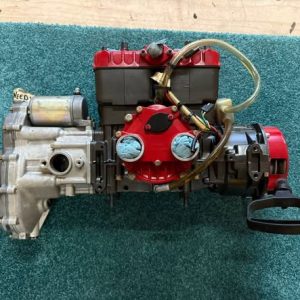
The Rotax 582 “Blue Head” RAVE Engine – Built by Rotax Rick should be selected only after confirming its serial number, builder records, internal configuration, gearbox, operating history, inspection status, and aircraft compatibility.
Whether buyers search for a Rotax 582 Blue Head, Rotax 582 Blue Head RAVE Engine, or Rotax 582 Aircraft Engine, condition and installation suitability should guide the purchase.
These related keywords help connect the listing with aircraft builders, sport pilots, engine specialists, and aviation parts buyers.
A Liquid-Cooled Aircraft Engine depends on a complete radiator, hoses, coolant system, pump, and suitable airflow installation.
These keywords support relevant SEO while preserving responsible guidance for aviation engine selection.
Why Exact Engine Identification Matters
The seller should provide detailed photographs of the engine from every side, including the data plate, heads, cylinders, carburetors, gearbox, ignition, exhaust ports, and accessories.
The buyer should determine whether the engine was rebuilt from a complete core, assembled from mixed components, upgraded from another configuration, or built using new and used parts.
Built by Rotax Rick
The phrase built by Rotax Rick should be supported by documentation identifying the builder, build date, work performed, components installed, inspections completed, and any testing conducted.
Any remaining break-in requirements, operating limitations, fuel recommendations, or follow-up inspections should be disclosed.
RAVE System and Power-Valve Configuration
The exact RAVE parts, housings, valves, springs, diaphragms, passages, and adjustment status should be inspected during engine evaluation.
RAVE-system condition should be included in maintenance and pre-purchase records.
Fuel and Lubrication Considerations
Two-stroke engines should not be operated using assumptions drawn from automotive or four-stroke aircraft engines.
The buyer should determine whether the engine uses oil injection, premixed fuel, or another documented lubrication arrangement.
Inspecting Radiator and Coolant Components
Cooling performance depends on the radiator, coolant pump, hoses, clamps, fittings, expansion tank, thermostat where installed, coolant condition, and airflow.
The system should be filled, vented, pressure checked, and monitored through suitable procedures.
Two-Cylinder Engine Construction
A clean exterior does not reveal the condition of internal rotating and reciprocating components.
Professional internal evaluation supports the long-term value of the Two-Cylinder Aircraft Engine.
Maintaining Smooth Engine Response
The Rotax 582 commonly uses a dual-carburetor induction arrangement that requires suitable setup, synchronization, jetting, cable adjustment, and fuel delivery.
A setting that worked on another aircraft may not be suitable for the receiving installation.
Aircraft Engine Ignition Testing
Damaged insulation, corroded connections, unsuitable plugs, weak grounds, or failing components can cause misfiring and poor engine operation.
Excessive engine-speed drop, roughness, intermittent firing, or unusual plug condition should receive prompt investigation.
Selecting a Compatible Propeller System
Complete engine, gearbox, and propeller evaluation supports a more suitable installation.
Improper propeller loading can affect both engine and gearbox condition.
Inspecting the Rotax 582 Exhaust
The exhaust system forms an important part of two-stroke engine operation and should match the intended Rotax 582 configuration.
Exhaust parts should remain clear of fuel lines, coolant hoses, wiring, controls, and heat-sensitive components.
Lightweight Aircraft Engine Advantages
The Rotax 582 is frequently considered where compact dimensions and useful power are important to the aircraft design.
The complete conversion should be reviewed through appropriate engineering and maintenance processes.
Ultralight and Experimental Aircraft Applications
Successful use in one aircraft type does not establish compatibility with another airframe.
Professional planning supports a more dependable experimental-aircraft project.
Understanding Installation Responsibilities
Engine condition and aircraft eligibility are separate considerations.
Operating limitations should reflect the actual aircraft and engine combination.
Engine Hours, Build Time, and Service History
Complete records improve engine valuation and maintenance planning.
Organized history supports a more informed Rotax 582 Blue Head purchase.
Testing the Rotax 582 Before Purchase
Engine runs should be completed using suitable mounting, cooling, fuel, exhaust, propeller-safety, and monitoring procedures.
Test results should document temperatures, engine speed, ignition checks, coolant behavior, fuel leaks, exhaust condition, and any abnormal indications when appropriate.
Documenting Internal Condition
A single measurement should not replace a complete review of operating history, internal parts, build records, and run behavior.
Unknown internal condition should be disclosed clearly.
Aircraft Engine Buying Guide
Any uncertainty regarding internal parts, build scope, operating history, or aircraft compatibility should be resolved before shipment.
- Compare the engine with the receiving aircraft’s mount, weight-and-balance needs, gearbox ratio, propeller requirements, cooling system, exhaust, fuel delivery, controls, electrical system, and cowling.
- Review documentation for crankshaft replacement, bearings, seals, pistons, rings, cylinders, RAVE service, carburetor work, ignition inspection, gearbox maintenance, and run testing.
- Confirm the invoice, payment protection, shipping method, freight insurance, inspection period, return conditions, and stated engine status.
Shipping and Storing the Rotax 582
Professional packaging protects the Rotax 582 Aircraft Engine from avoidable freight damage.
Preservation records should identify the date, materials used, and any required steps before operation.
Completing a Rotax Aviation Engine Project
Installation should be completed by appropriately qualified and experienced personnel using applicable engine, aircraft, propeller, and component information.
Throttle and enrichment controls should move smoothly through the intended range without binding or unequal carburetor travel.
Required aircraft records and operating limitations should be updated appropriately.
Maintaining the Rotax 582 Blue Head Engine
Long-term maintenance includes inspection of spark plugs, carburetors, fuel lines, filters, cooling hoses, coolant, ignition parts, RAVE components, exhaust supports, gearbox, mounts, wiring, and leaks.
Unverified replacement parts and undocumented modifications should be avoided.
Choosing a Lightweight Aviation Powerplant
Engines with detailed build sheets, photographs, invoices, run videos, and transparent history are easier for serious buyers to evaluate.
Commercial evaluation should focus on verified usability rather than appearance or price alone.
Final Thoughts on the Rotax 582 Blue Head
The Rotax 582 “Blue Head” RAVE Engine – Built by Rotax Rick may suit aircraft builders, sport pilots, gyrocopter operators, powered-parachute owners, restoration specialists, and aviation parts buyers seeking a documented two-stroke engine.
The powerplant should not be judged solely through blue heads, clean paint, a 65HP description, builder recognition, or purchase price.
Whether the requirement is a Rotax 582 Blue Head, Rotax 582 Blue Head RAVE Engine, Rotax 582 Aircraft Engine, or Rotax 582 Two-Stroke Engine, exact configuration should guide the purchase.
With responsible purchasing, careful fuel and oil management, effective cooling, synchronized carburetors, here and preventive inspection, the engine can remain a valuable light-aircraft asset.